



JAPAN’S SHORTS-AT-WORK POLICY SPARKS DEBATE OVER HEAT, FASHION AND ‘LEG HAIR HARASSMENT’
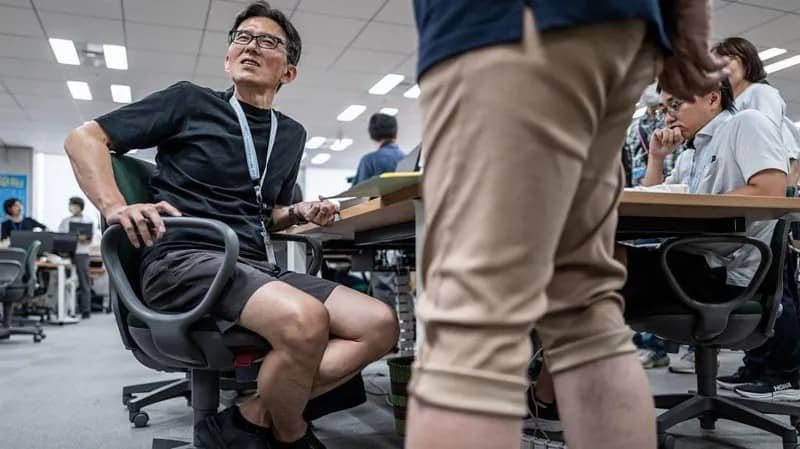
A Tokyo government campaign encouraging men to wear shorts to offices during extreme summer heat has triggered mixed reactions, with some workers welcoming the comfort while others argue it creates a new workplace etiquette problem.
The initiative, introduced by Tokyo Governor Yuriko Koike, aims to help employees cope with rising temperatures by allowing more casual office clothing, including shorts, T-shirts and trainers, under the city’s long-running “Tokyo Cool Biz” energy-saving campaign.
Tokyo Metropolitan Government environmental official Noboru Watanabe said the policy was designed to give workers more options during severe heat, not force them to change their clothing style.
“We want to give people more options in the severe heat, not tell them what to wear,” Watanabe said, adding that office clothing should remain appropriate.
However, some women have criticised the move, saying men are being allowed to show their legs freely while women in traditional Japanese workplaces are often still expected to wear tights when their outfits expose their legs.
Some online commentators have even coined the term “sunehara”, meaning “leg hair harassment,” to describe discomfort caused by seeing colleagues’ uncovered, hairy legs.
A survey by Gorilla Clinic found that 53.5 per cent of respondents opposed wearing shorts to work during summer, while 46.5 per cent supported the idea. Concerns about body shape and body hair were among the main reasons for opposition.
The debate comes as Japan faces record-breaking heat, with temperatures exceeding 40 degrees Celsius in some areas. Authorities have warned citizens to take precautions against heatstroke, with thousands of people recently hospitalised due to extreme heat.
The Cool Biz campaign began in 2005 to reduce energy consumption by encouraging workers to abandon jackets and ties during hot months. It was later expanded after the 2011 earthquake and tsunami as part of efforts to save electricity.
As Japan battles intense heat and high humidity, officials continue to promote cooling measures, including hydration, air conditioning, heat-resistant clothing and other tools to help residents stay safe.